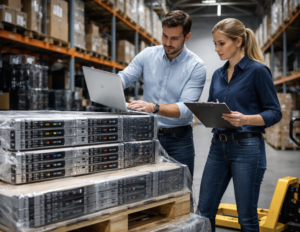
In the world of information technology, people often think first about networks, cybersecurity, cloud infrastructure, software, and support. What they do not always think about is the physical movement of the equipment that keeps everything running. Servers, workstations, networking hardware, components, displays, backup systems, and other valuable assets still have to be stored, staged, shipped, received, and sometimes moved again. That is exactly where a reliable pallet partner can make a serious difference for an IT business.
The Physical Side of IT Is Still a Big Deal
Even though IT is often associated with digital services, the business side of IT still depends on physical operations. Managed service providers, enterprise resellers, hardware refurbishers, data center vendors, telecom installers, e-commerce technology sellers, and internal IT departments all handle equipment that must arrive in good condition and in the right quantity. A dependable Pallet Manufacturer can support that side of the business by helping create a more dependable shipping and storage foundation.
That matters even more right now because the broader IT business environment continues to revolve around infrastructure, artificial intelligence, data center growth, enterprise tools, and the movement of high-value technology assets. You can see that emphasis across outlets such as Reuters Technology, Reuters AI coverage, and TechCrunch Enterprise, all of which continue to highlight how hardware, AI capacity, and enterprise systems remain central to business growth.
Why Shipping Reliability Matters More in IT
An IT business may ship products that are delicate, expensive, time-sensitive, or all three at once. A damaged server rack component, a broken monitor, or compromised networking equipment can lead to delayed installs, unhappy customers, costly replacements, and internal stress that never should have happened in the first place.
Reliable pallets help support load stability, safer forklift handling, cleaner warehouse organization, and more consistent transport conditions. When an IT company is coordinating multiple deliveries across offices, data centers, job sites, or fulfillment points, even the shipping platform itself becomes part of operational performance. A better pallet setup can reduce unnecessary movement, improve stacking discipline, and support cleaner receiving processes at the destination.
For an IT business, that is not a small detail. It can affect timelines, service quality, customer confidence, and profit margins. If a company promises smooth deployment and then runs into avoidable transit issues, the reputation hit may cost more than the shipment itself.
Better Pallets Can Help Protect Expensive Equipment
IT equipment is not cheap. Businesses today are managing everything from laptops and mobile device fleets to switches, firewalls, batteries, scanners, storage arrays, and specialized computing hardware. Even when products are boxed, wrapped, and labeled correctly, the pallet underneath the load still matters. If that base is weak, uneven, poorly sized, or inconsistent, the entire shipment becomes more vulnerable.
A reliable pallet source can help support better load distribution and more predictable handling. That can be important for businesses dealing with repeat shipments, recurring installations, product rollouts, seasonal refreshes, warranty replacements, or bulk hardware transfers between facilities. If your company is moving the same types of products regularly, a more consistent pallet solution can support more consistent results.
This is especially relevant in a climate where IT business news keeps focusing on enterprise infrastructure, new chip investments, and expanding AI-related capacity. That trend points to a simple business truth: when the hardware becomes more valuable, the cost of handling it carelessly goes up. Reuters and AP coverage this year has continued to spotlight AI infrastructure, chip investment, and the pressure that large-scale computing growth puts on physical operations and data center ecosystems.
Warehouse Efficiency Supports IT Profitability
A lot of IT companies are trying to become leaner, faster, and more organized. That is true for small firms and large enterprises alike. Better warehouse flow, clearer inventory handling, and fewer avoidable delays can help support profitability without forcing the company to sell more just to feel growth.
The right pallet supplier can contribute to that by helping an IT business think more strategically about storage and movement. Pallets affect how products are stacked, how much room is used, how easy items are to count, how safely they can be moved, and how efficiently they can be loaded out. A poor pallet setup can waste warehouse space, create unnecessary rework, and make product movement slower than it needs to be.
For IT companies that carry inventory, stage hardware, or support rollouts for clients, this can have a direct effect on service speed. A company that knows where products are, can move them easily, and can trust the platform they are stacked on is usually in a better position to deliver on time and without confusion.
That operational discipline fits the current business conversation in technology. Major news coverage in the IT space continues to center on efficiency, cost control, scaling enterprise systems, and the business impact of infrastructure decisions. Outlets like AP Technology and AP Business reflect that broader environment, where execution matters just as much as innovation.
IT Businesses Need Dependable Supply Chain Partners
It is easy to think of pallets as a commodity that can come from anywhere. In reality, dependability matters. If an IT business is growing, expanding into new service areas, or managing recurring shipments, it needs vendors it can trust. That includes the companies that provide the basic materials supporting shipment flow.
A dependable pallet source can help an IT business maintain continuity. That may include consistent sizing, faster fulfillment, clearer communication, and the ability to support larger or repeat orders without added chaos. Those details matter when a business is coordinating installs, client delivery schedules, internal deployment plans, or hardware migrations.
Reliable partners also reduce friction. Instead of scrambling to solve avoidable packaging and shipping issues, the IT team can stay focused on projects, service, infrastructure, and customer relationships. That is where operational support becomes real business support. A pallet supplier is not just selling wood. They are helping support the logistics layer behind your promises.
Custom Needs Are Common in IT Operations
Not every IT shipment is simple. Some businesses move oddly sized equipment, bundled hardware kits, sensitive electronics, or products that need special handling and organized staging. Others need pallets that work well with their own warehouse systems, racking, or shipping methods. That is why a reliable manufacturer can be more valuable than a generic one-size-fits-all source.
Customization, consistency, and communication can be especially helpful for IT businesses handling repeat account rollouts, franchise technology deployments, campus upgrades, office expansions, retail tech installations, or large-scale procurement programs. When a company is working across multiple sites, standardization becomes a real advantage. It makes internal handling easier and helps receiving teams know what to expect.
A strong pallet partner can also become part of broader process improvement. Instead of treating shipping supports as an afterthought, an IT business can align them with inventory practices, warehouse safety, fulfillment expectations, and customer delivery standards. That is the kind of behind-the-scenes improvement that often produces visible business results.
Sustainability and Brand Reputation Matter Too
Many IT businesses care about more than speed and cost. They also care about how their operations reflect on their brand. Clients, partners, and enterprise buyers increasingly notice whether a company pays attention to efficiency, waste, and responsible business practices.
A reliable pallet source may help support cleaner operations through better reuse planning, reduced product damage, and more consistent material handling. Even modest improvements in those areas can support stronger operational discipline over time. For a company that wants to present itself as thoughtful, organized, and trustworthy, those details add up.
That connects with larger conversations happening in technology and business media. News coverage around data centers, AI growth, and enterprise scaling increasingly overlaps with operational responsibility, energy use, and infrastructure planning. The fact that those issues are receiving such sustained attention shows how closely physical operations and business reputation are now tied together in the IT space.
A Stronger Logistics Foundation Can Improve Customer Experience
Customers do not usually ask what kind of pallet was used to ship their hardware. What they do notice is whether the shipment arrives intact, on time, organized, and ready for action. They notice whether installs are delayed, whether products are missing, whether replacements are needed, and whether the company seems in control.
That means the logistics layer affects customer experience whether people talk about it or not. An IT business that takes shipping seriously is often a business that protects trust more effectively. Reliable pallets can support that goal by reducing one more point of failure in the chain.
If your company serves businesses that depend on uptime, security, and dependable infrastructure, then your physical shipment standards should match the seriousness of the solutions you provide. A reliable pallet partner helps support that consistency from the warehouse floor to the final delivery point.
Conclusion
An IT business may need a reliable pallet manufacturer for a simple reason: digital companies still depend on physical execution. Hardware must move safely. Inventory must be organized. Deliveries must stay on schedule. Expensive equipment must be protected. Internal teams must be able to trust the systems and partners supporting fulfillment.
When you look at the demands facing modern IT businesses, it becomes clear that operational strength is not separate from business growth. It is part of it. A dependable pallet source can help support safer shipping, better storage, cleaner warehouse flow, stronger consistency, and a more reliable customer experience. For an IT business that wants to grow with confidence, that kind of support is not minor. It is part of building a better operation from the ground up.